Toyota and Others Enabling Self-Driving Cars to Talk to Each OtherXconomy Boston —Drivers have plenty of ways to communicate with their fellow drivers, beyond the basic turn signal. For autonomous vehicles, vehicle-to-vehicle communication "matters a lot because it can drastically improve the safety of these cars working together," Pratt said. Of course, even if companies develop reliably safe autonomous vehicles, roads won't transition from all human drivers to all machine-controlled vehicles overnight. Another issue is that autonomous vehicles will need to be able to recognize signals from a police officer directing traffic in the street—and know to obey that person. That means driverless cars will need to be able to communicate with human drivers and understand their behaviors.
as mentioned in
Why Toyota Is Taking Its Own Road to Self-Driving Cars -- The Motley Fool
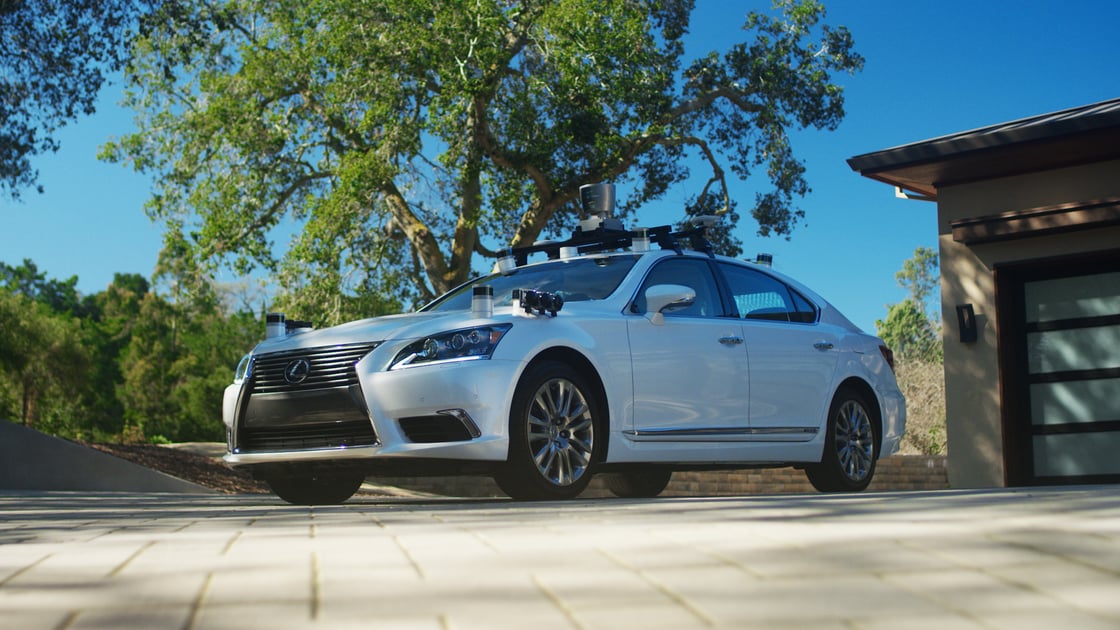
But self-driving as we think of it is only part of this new Toyota test car's mission. Toyota (NYSE:TM) has a brand-new self-driving test vehicle -- and it's designed to help the company develop two different approaches to advanced safety technology, simultaneously. A new vehicle to support two research pathsThe new test vehicle was created by the Toyota Research Institute (TRI), a research facility based in Silicon Valley that Toyota opened early last year. Toyota thinks a system like Guardian will be able to make a significant improvement in driver safety before self-driving cars become commonplace. The system also includes the LIDAR, radar, and camera sensors you'd expect to see on a self-driving test car.
Toyota Tests Self-Driving Car

PALO ALTO -– The Toyota Research Institute (TRI) has revealed its 2.0 generation advanced safety research vehicle at the company's Prius Challenge event in Sonoma California. The platform is the second generation of the advanced safety research vehicle revealed to the public by Toyota at the 2013 Consumer Electronics Show. Chauffeur refers to the always deployed, fully autonomous system classified by SAE as unrestricted Level 5 autonomy and Level 4 restricted and geo-fenced operation. Toyota's work on autonomous vehicles in the United States began in 2005 at its technical center in Ann Arbor, MI. "This new advanced safety research vehicle is the first autonomous testing platform developed entirely by TRI, and reflects the rapid progress of our autonomous driving program," said TRI CEO Gill Pratt.
read more visit us Toyota